
My one liner: How do societies adapt to Disruptive Change? Exerting discipline through fear. Labour skills reflect society’s needs. Why “National Patrimony” matters. Being local versus global depends on society’s current needs. We are crucially dependent on our modern communications networks. Opportunity Cost determines Resource Allocation. Life Experiences give us important intuitive skills. Just some of the lessons learned from World War Z.
As 2012 draws to a close, I have taken the opportunity to publish the second in the occasional series, Lessons from Fiction. The subject is “How Society adapts to Disruptive Change”
The book which gives us some rich insights is World War Z (2006) by Max Brooks. Written as the account of an agent of the United Nations Postwar Commission, World War Z is a series of post-war interviews with all sorts of people from all over the world who lived through a fictional apocalyptic war.
The war was a 10-year conflict against Zombies, following a Zombie pandemic which originated in China (and was originally covered up by the Chinese government), spread to South America via the illegal donor trade, and finally came to prominence following an outbreak in South Africa. Zombies are devoid of intelligence and are motivated only by the desire to consume human flesh. Shortly after being bitten by a zombie, a human will “die” and then become a zombie itself. The only way to destroy them is to destroy the brain. They do not tire, and are as strong as the humans they infect. At peak, there were 200 million zombies threatening humanity, and the book alludes to the human race coming to the brink of extinction.
Here is a YouTube simulation of a Zombie attack (unrelated to the book), originating in Peru.
As 2012 draws to a close, I have taken the opportunity to publish the second in the occasional series, Lessons from Fiction. The subject is “How Society adapts to Disruptive Change”
The book which gives us some rich insights is World War Z (2006) by Max Brooks. Written as the account of an agent of the United Nations Postwar Commission, World War Z is a series of post-war interviews with all sorts of people from all over the world who lived through a fictional apocalyptic war.
The war was a 10-year conflict against Zombies, following a Zombie pandemic which originated in China (and was originally covered up by the Chinese government), spread to South America via the illegal donor trade, and finally came to prominence following an outbreak in South Africa. Zombies are devoid of intelligence and are motivated only by the desire to consume human flesh. Shortly after being bitten by a zombie, a human will “die” and then become a zombie itself. The only way to destroy them is to destroy the brain. They do not tire, and are as strong as the humans they infect. At peak, there were 200 million zombies threatening humanity, and the book alludes to the human race coming to the brink of extinction.
Here is a YouTube simulation of a Zombie attack (unrelated to the book), originating in Peru.
Which is obviously quite an unlikely thing to actually happen. However, it got me thinking what might be real-world applications.
An interesting paper on the mathematics of containing a zombie outbreak is here. Its major conclusion is that only quick, aggressive attacks can stave off the doomsday scenario of the total collapse of society. The paper points to some possible applications of the analysis, including martyrdom-based religious extremism. Is that why we observe quick and aggressive military strikes against alleged terrorist strongholds ?
And what of the current financial crisis ? “Zombie banks” was a term first coined by Edward Kane during the Savings and Loans crisis of the late 1980s. It describes an insolvent financial institution that continues to exist simply because it benefits from government guarantees of its ability to repay its debts. Such banks become a drain on the resources of the state whilst fulfilling no useful asset allocation function. Many commentators argue, and I agree, that much of our current financial system suffers from this malaise. Modelling the negative systemic impact of keeping zombie banks afloat (as opposed to letting them go) would I think be an interesting field of research.
But that’s a digression. Back to the book. The personal accounts tell of people’s survival stories, their roles in discovering or overcoming the threat, and the social, geopolitical, economic and physical changes that people, nations, the environment went through during that period.
Clearly an extreme fictional tale, but extremely well-researched, such that we may draw some interesting conclusions as to how societies behave during times of extreme disruption.
Discipline can be exercised through Fear
The Russian army had its own way of ensuring that its soldiers would fight for the cause. It stripped the soldiers of their own humanity, and their ability to decide for themselves. The result was total submission to the mission. An insight into how repressive societies coerce and co-opt their citizens into the national project, whatever that may be. The 20th century saw this on a grand scale, with millions of people induced to oppress and murder to compatriots so that they become collaborators in the scheme of the dictator. Decimation also incidentally appears in Roman and Greek mythology. The three Parcae were the Roman female personifications of fate (see previous post on this subject). Nona spun the thread of life, Decima measured the thread of life and Morta cut the thread of life. Not much research available on the internet, but it makes one wonder why the name of the preserver of life refers to partitioning into tenth parts.
“To decimate… I used to think it meant just to wipe out, cause horrible damage, destroy… It actually means to kill by a percentage of ten, one out of every ten must die… and that’s exactly what they did to us…
The Spetznaz had us assemble on the parade ground, full dress uniform no less… ‘You spoiled children think democracy is a God-given right. You expect it, you demand it ! Well, now you’re going to get your chance to practice it’
… ‘What did he mean ?’
We would be the ones to decide who would be punished. Broken up into groups of ten, we would have to vote on which one of us was going to be executed. And then we… the soldiers, we would be the ones to personally murder our friends… We could have said no, could have refused and been shot ourselves, but we didn’t. We went right along with it. We all made a conscious choice and because that choice carried such a high price, I don’t think anyone ever wanted to make another one again. We relinquished our freedom that day, and we were more than happy to see it go.”
An interesting paper on the mathematics of containing a zombie outbreak is here. Its major conclusion is that only quick, aggressive attacks can stave off the doomsday scenario of the total collapse of society. The paper points to some possible applications of the analysis, including martyrdom-based religious extremism. Is that why we observe quick and aggressive military strikes against alleged terrorist strongholds ?
And what of the current financial crisis ? “Zombie banks” was a term first coined by Edward Kane during the Savings and Loans crisis of the late 1980s. It describes an insolvent financial institution that continues to exist simply because it benefits from government guarantees of its ability to repay its debts. Such banks become a drain on the resources of the state whilst fulfilling no useful asset allocation function. Many commentators argue, and I agree, that much of our current financial system suffers from this malaise. Modelling the negative systemic impact of keeping zombie banks afloat (as opposed to letting them go) would I think be an interesting field of research.
But that’s a digression. Back to the book. The personal accounts tell of people’s survival stories, their roles in discovering or overcoming the threat, and the social, geopolitical, economic and physical changes that people, nations, the environment went through during that period.
Clearly an extreme fictional tale, but extremely well-researched, such that we may draw some interesting conclusions as to how societies behave during times of extreme disruption.
Discipline can be exercised through Fear
The Russian army had its own way of ensuring that its soldiers would fight for the cause. It stripped the soldiers of their own humanity, and their ability to decide for themselves. The result was total submission to the mission. An insight into how repressive societies coerce and co-opt their citizens into the national project, whatever that may be. The 20th century saw this on a grand scale, with millions of people induced to oppress and murder to compatriots so that they become collaborators in the scheme of the dictator. Decimation also incidentally appears in Roman and Greek mythology. The three Parcae were the Roman female personifications of fate (see previous post on this subject). Nona spun the thread of life, Decima measured the thread of life and Morta cut the thread of life. Not much research available on the internet, but it makes one wonder why the name of the preserver of life refers to partitioning into tenth parts.
“To decimate… I used to think it meant just to wipe out, cause horrible damage, destroy… It actually means to kill by a percentage of ten, one out of every ten must die… and that’s exactly what they did to us…
The Spetznaz had us assemble on the parade ground, full dress uniform no less… ‘You spoiled children think democracy is a God-given right. You expect it, you demand it ! Well, now you’re going to get your chance to practice it’
… ‘What did he mean ?’
We would be the ones to decide who would be punished. Broken up into groups of ten, we would have to vote on which one of us was going to be executed. And then we… the soldiers, we would be the ones to personally murder our friends… We could have said no, could have refused and been shot ourselves, but we didn’t. We went right along with it. We all made a conscious choice and because that choice carried such a high price, I don’t think anyone ever wanted to make another one again. We relinquished our freedom that day, and we were more than happy to see it go.”
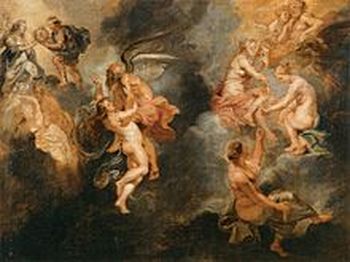
The Parcae (Nona, Decima and Morta) by Peter Paul Rubens. They are spinning the Fate of Marie de' Medici. Decima is responsible for determining the fate of a person.
Labour skills reflect Society’s needs
When disruption comes, the labour market changes abruptly. In a Zombie war, modern weapons do not work. Additionally, say goodbye to modern manufacturing methods, large scale agricultural production, non-essential service occupations, mass-media as a leisure pursuit.
Gradual disruptions could also have this effect; if you believe that environmental or economic changes will in the future make people less mobile, then skills which emphasise real production and output will be more valuable than those which value intangible services or agency.
“You should have seen some of the “careers” listed on our first employment census; everyone was some version of an “executive”, a “representative”, an “analyst”, or a “consultant”, all perfectly suited to the pre-war world, but all totally inadequate for the present crisis. We needed carpenters, masons, machinists, gunsmiths. We had those people, to be sure, but not nearly as many as were necessary. The first labor survey stated that over 65 percent of the present civilian workforce were classified F-6, possessing no valued vocation. We required a massive retraining program. In short, we needed to get a whole lot of white collars dirty.”
One by-product of this could be an improved sense of emotional well-being, with people feeling that what they do is socially useful. The evidence on this is not clear-cut either way. Some studies suggest that once basic human needs are met above a certain level (measured by GDP per capita) then there is no international correlation between happiness and income, although within countries rising income is related to rising happiness (the so-called Easterlin Paradox). Others argue that there is indeed an international correlation also. Not for debate here, but it does seem intuitive that what people value is "relative" well-being. In a world where everyone has more equal personal wealth (in this case because of the need to fight a common enemy), then they derive more utility from contributing to their local community.
Certainly the author seems to imply that people are happier when they are more connected to their community.
When disruption comes, the labour market changes abruptly. In a Zombie war, modern weapons do not work. Additionally, say goodbye to modern manufacturing methods, large scale agricultural production, non-essential service occupations, mass-media as a leisure pursuit.
Gradual disruptions could also have this effect; if you believe that environmental or economic changes will in the future make people less mobile, then skills which emphasise real production and output will be more valuable than those which value intangible services or agency.
“You should have seen some of the “careers” listed on our first employment census; everyone was some version of an “executive”, a “representative”, an “analyst”, or a “consultant”, all perfectly suited to the pre-war world, but all totally inadequate for the present crisis. We needed carpenters, masons, machinists, gunsmiths. We had those people, to be sure, but not nearly as many as were necessary. The first labor survey stated that over 65 percent of the present civilian workforce were classified F-6, possessing no valued vocation. We required a massive retraining program. In short, we needed to get a whole lot of white collars dirty.”
One by-product of this could be an improved sense of emotional well-being, with people feeling that what they do is socially useful. The evidence on this is not clear-cut either way. Some studies suggest that once basic human needs are met above a certain level (measured by GDP per capita) then there is no international correlation between happiness and income, although within countries rising income is related to rising happiness (the so-called Easterlin Paradox). Others argue that there is indeed an international correlation also. Not for debate here, but it does seem intuitive that what people value is "relative" well-being. In a world where everyone has more equal personal wealth (in this case because of the need to fight a common enemy), then they derive more utility from contributing to their local community.
Certainly the author seems to imply that people are happier when they are more connected to their community.
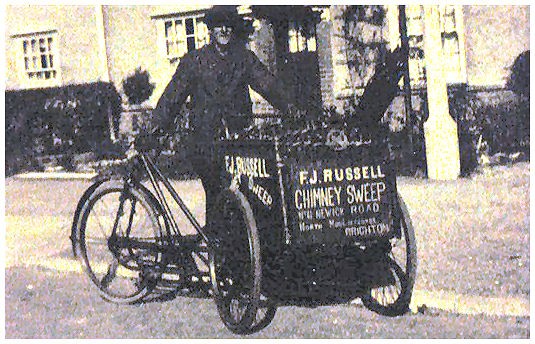
Under what circumstances could this vocation become desirable ?
“I met one gentleman on a coastal ferry from Portland to Seattle. He had worked in the licensing department for an advertising agency, specifically in charge of procuring the rights to classic rock songs for television commercials. Now he was a chimney sweep. Given that most homes in Seattle had lost their central heat and the winters were now longer and colder, he was seldom idle. “I help keep my neighbours warm,” he said proudly. I know it sounds a little too Norman Rockwell, but I hear stories like that all the time. “You see those shoes, I made them,” “That sweater, that’s my sheep’s wool,” “Like the corn ? My garden”. That was the upshot of a more localised system. It gave people the opportunity to see the fruits of their labour, it gave them a sense of individual pride to know that they were making a clear, concrete contribution to victory.”
The modern communications network is irreplaceable
Satellites are used for a number of civilian applications: navigation and positioning; communication (including telephony, internet, television and radio); weather forecasting; earth mapping (including agricultural yields, forestry, and geology). Not to mention military uses. All of our modern communication depends on them: the world as we know it would literally fall apart without them. In the novel a team of astronauts mans the International Space Station (ISS) in order to keep a small number of satellites in orbit. The team was not guaranteed any passage back to earth, but given the importance of keeping satellites working they decided to stay on the ISS anyway….
The modern communications network is irreplaceable
Satellites are used for a number of civilian applications: navigation and positioning; communication (including telephony, internet, television and radio); weather forecasting; earth mapping (including agricultural yields, forestry, and geology). Not to mention military uses. All of our modern communication depends on them: the world as we know it would literally fall apart without them. In the novel a team of astronauts mans the International Space Station (ISS) in order to keep a small number of satellites in orbit. The team was not guaranteed any passage back to earth, but given the importance of keeping satellites working they decided to stay on the ISS anyway….

Animation depicting the orbits of GPS satellites in medium Earth orbit.
National Patrimony determines economic well-being
One of the biggest lessons of World War Z is in my opinion the importance of a term which I think is much under-used “National Patrimony”. The concept is has been the subject of a previous post, Why the West rules…For Now, and it refers to the accumulated store of a country’s wealth and resources. In its narrowest definition it may consist of natural resources and financial holdings, but it should really be broadened to cover the entire endowment of attributes and heritage that a country possesses, for example its culture, national identity, homogeneity, role of government, integration with other countries.
In today’s globalised world Cuba’s isolation and self-dependence in relation to the above attributes has been very much a handicap. In the post-apocalyptic world physical and cultural isolation, a nationalistic mindset, disproportionate investment in healthcare, and the psychology of being accustomed to face a common adversary, all became important assets in the flourishing of Cuba as the world’s wealthiest country.
This is surely true of any era in time. When analysing the relative outlook and capabilities of different countries, do we not put too much emphasis on flow items (deficits / surpluses, income levels, growth items, outputs, etc) ? Surely in any era or cycle it is the National Patrimony of a country that determines its economic well-being.
“Cases were small and immediately contained, mostly Chinese refugees and a few European businessmen. Travel from the United States was still largely prohibited, so we were spared the initial blow of first-wave mass migration. The repressive nature of our fortress society allowed the government to take steps to ensure that the infection was never allowed to spread. All internal travel was suspended, and both the regular army and territorial militias were mobilized. Because Cuba had such a high percentage of doctors per capita, our leader knew the true nature of the infection weeks after the first outbreak was reported… By the time of the Great Panic, when the world finally woke up to the nightmare breaking down their doors, Cuba had already prepared itself for war… The simple fact of geography spared us the danger of large-scale, overland swarms. Our invaders came from the sea, specifically from an armada of boat people. Not only did they bring contagion, as we have seen throughout the world, there were also those who believed in ruling their new homes as modern-day conquistadors.”
One of the biggest lessons of World War Z is in my opinion the importance of a term which I think is much under-used “National Patrimony”. The concept is has been the subject of a previous post, Why the West rules…For Now, and it refers to the accumulated store of a country’s wealth and resources. In its narrowest definition it may consist of natural resources and financial holdings, but it should really be broadened to cover the entire endowment of attributes and heritage that a country possesses, for example its culture, national identity, homogeneity, role of government, integration with other countries.
In today’s globalised world Cuba’s isolation and self-dependence in relation to the above attributes has been very much a handicap. In the post-apocalyptic world physical and cultural isolation, a nationalistic mindset, disproportionate investment in healthcare, and the psychology of being accustomed to face a common adversary, all became important assets in the flourishing of Cuba as the world’s wealthiest country.
This is surely true of any era in time. When analysing the relative outlook and capabilities of different countries, do we not put too much emphasis on flow items (deficits / surpluses, income levels, growth items, outputs, etc) ? Surely in any era or cycle it is the National Patrimony of a country that determines its economic well-being.
“Cases were small and immediately contained, mostly Chinese refugees and a few European businessmen. Travel from the United States was still largely prohibited, so we were spared the initial blow of first-wave mass migration. The repressive nature of our fortress society allowed the government to take steps to ensure that the infection was never allowed to spread. All internal travel was suspended, and both the regular army and territorial militias were mobilized. Because Cuba had such a high percentage of doctors per capita, our leader knew the true nature of the infection weeks after the first outbreak was reported… By the time of the Great Panic, when the world finally woke up to the nightmare breaking down their doors, Cuba had already prepared itself for war… The simple fact of geography spared us the danger of large-scale, overland swarms. Our invaders came from the sea, specifically from an armada of boat people. Not only did they bring contagion, as we have seen throughout the world, there were also those who believed in ruling their new homes as modern-day conquistadors.”
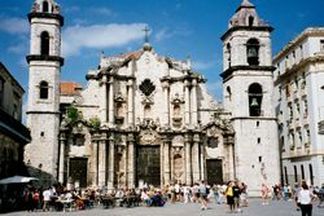
Catedral de San Cristobal, Havana. And Cuba as the world's financial centre ?
Opportunity Cost determines Resource Allocation
The first thing that my Economics teacher at school taught us in our first lesson was: “There is only one cost which matters: Opportunity Cost.” Governments and administrators face choices all the time, since they do not have infinite resources. In the Zombie attack the realisation that governments came to was that it was impossible to protect and save the whole population. And, more objectively, once you have decided which cohort of the population you are going to save, then the remainder can actually be turned into an asset to fight against the threat by acting as a decoy. In the book, all governments eventually adopted a version of the “Redeker Plan” as first developed by Paul Redeker during the apartheid era in South Africa.
Brutal and chilling, yes. And clearly much too extreme for any peace-time decision making. However, it does remind us government policy-making must by definition favour one group over another. This could have profound implications in areas such as healthcare, where currently most governments do not explicitly allocate resources based on quantitative measures of their outcomes. Quality Adjusted Life Years (QALYs) were an early attempt at this (what will be the patients quality of life and how long will he live, if you apply a given treatment ?), and some stories in the media suggest that hospitals do operate such policies unofficially. I think that with budget constraints in the future, such resource allocation will become more explicit.
“This is where [Paul] Redeker stepped in. His revised Plan Orange, appropriately completed in 1984, was the ultimate survival strategy for the Afrikaner people. No variable was ignored. Population figures, terrain, resources, logistics… Redeker not only updated the plan to include both Cuba’s chemical weapons and his own country’s nuclear option, but also, and this is what made the “Orange Eighty-Four” so historic, the determination of which Afrikaners would be saved and which had to be sacrificed… Redeker believed that to try to protect everyone would stretch the government’s resources to the breaking point. He compared it to survivors of a sinking ship capsizing a lifeboat that simply did not have room for them all. Redeker had even gone so far as to calculate who should be “brought aboard”. He included income, IQ, fertility, an entire checklist of “desirable qualities”, including the subject’s location to a potential crisis zone. ‘The first casualty of the conflict must be our own sentimentality’ was the closing statement for his proposal, “for its survival will mean our own destruction.” Orange Eighty-Four was a brilliant plan. It was clear, logical, efficient, and it made Paul Redecker one of the most hated men in South Africa.”
Life Experiences give us important intuitive skills
The first thing that my Economics teacher at school taught us in our first lesson was: “There is only one cost which matters: Opportunity Cost.” Governments and administrators face choices all the time, since they do not have infinite resources. In the Zombie attack the realisation that governments came to was that it was impossible to protect and save the whole population. And, more objectively, once you have decided which cohort of the population you are going to save, then the remainder can actually be turned into an asset to fight against the threat by acting as a decoy. In the book, all governments eventually adopted a version of the “Redeker Plan” as first developed by Paul Redeker during the apartheid era in South Africa.
Brutal and chilling, yes. And clearly much too extreme for any peace-time decision making. However, it does remind us government policy-making must by definition favour one group over another. This could have profound implications in areas such as healthcare, where currently most governments do not explicitly allocate resources based on quantitative measures of their outcomes. Quality Adjusted Life Years (QALYs) were an early attempt at this (what will be the patients quality of life and how long will he live, if you apply a given treatment ?), and some stories in the media suggest that hospitals do operate such policies unofficially. I think that with budget constraints in the future, such resource allocation will become more explicit.
“This is where [Paul] Redeker stepped in. His revised Plan Orange, appropriately completed in 1984, was the ultimate survival strategy for the Afrikaner people. No variable was ignored. Population figures, terrain, resources, logistics… Redeker not only updated the plan to include both Cuba’s chemical weapons and his own country’s nuclear option, but also, and this is what made the “Orange Eighty-Four” so historic, the determination of which Afrikaners would be saved and which had to be sacrificed… Redeker believed that to try to protect everyone would stretch the government’s resources to the breaking point. He compared it to survivors of a sinking ship capsizing a lifeboat that simply did not have room for them all. Redeker had even gone so far as to calculate who should be “brought aboard”. He included income, IQ, fertility, an entire checklist of “desirable qualities”, including the subject’s location to a potential crisis zone. ‘The first casualty of the conflict must be our own sentimentality’ was the closing statement for his proposal, “for its survival will mean our own destruction.” Orange Eighty-Four was a brilliant plan. It was clear, logical, efficient, and it made Paul Redecker one of the most hated men in South Africa.”
Life Experiences give us important intuitive skills
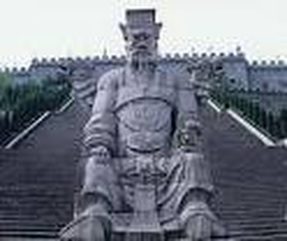
Fengdu Ghost City, China
The experience of the older generation is to be highly valued. Regular readers of this blog will know that I rant about the inexperience of the 40-something world leaders that we have these days. What happened to the 60 and 70-year olds who have seen the world, achieved something in alternative careers, and truly understand how the world works ? In World War Z, these were the people who understood the true ferocity of what was about to happen. Sometimes it is just intuition. One of the first interviews in World War Z is with a Chinese doctor called to an outbreak in Fengdu, where nobody yet understands that they are faced with a Zombie outbreak. But one old lady senses something serious is about to happen because she has seen calamity many times before…
“I’ve never see Fengdu as anything but a cheap, kitschy tourist trap. Of course this ancient crone’s words had no effect on me, but her tone, her anger… she had witnessed enough calamity in her years upon the earth: the warlords, the Japanese, the insane nightmare of the Cultural Revolution… she knew that another storm was coming, even if she didn’t have the education to understand it.”
And finally...
Many more accounts in the book than alluded to in this review, and much to reflect on. Which makes this book a sci-fi / fantasy novel that is eminently accessible to the Reader on the Clapham Omnibus.
The Wikipedia link to the book is here.
There’s a movie due out in June 2013, by the way. But it looks like it doesn’t really follow the structure of personal accounts where the outcome is already known. It seems more like Brad Pitt Saves the World.
Which is fine I suppose.
Here’s the trailer…
“I’ve never see Fengdu as anything but a cheap, kitschy tourist trap. Of course this ancient crone’s words had no effect on me, but her tone, her anger… she had witnessed enough calamity in her years upon the earth: the warlords, the Japanese, the insane nightmare of the Cultural Revolution… she knew that another storm was coming, even if she didn’t have the education to understand it.”
And finally...
Many more accounts in the book than alluded to in this review, and much to reflect on. Which makes this book a sci-fi / fantasy novel that is eminently accessible to the Reader on the Clapham Omnibus.
The Wikipedia link to the book is here.
There’s a movie due out in June 2013, by the way. But it looks like it doesn’t really follow the structure of personal accounts where the outcome is already known. It seems more like Brad Pitt Saves the World.
Which is fine I suppose.
Here’s the trailer…
 RSS Feed
